Showing posts with label wine. Show all posts

Wednesday, April 11, 2012

Private clubs, middle ground?

The Prohibition is known as the noble experiment ... that failed! The lesson learned from the experiment that legislating morality and person conduct is difficult. Not only is it difficult, it has proved to be counterproductive, since drinking increased during the 1920s, with an estimately 100,000 speakeasies in New York alone. While the Prohibition was repealed, states are empowered to make their own legislature when it comes to how it regulates alcohol. The focus of this blog is on how Arkansas has exercised this right.

Arkansas operates on a “local option” system, under which each county or city may determine whether alcoholic beverages may be sold in that area.  The 1969 law allows a private club to exist in a dry county as a nonprofit corporation with certain purposes “other than the consumption of alcoholic beverages.” Then in 2003, the law was amended to add three more purposes for private clubs — community hospitality, professional association and entertainment. The map below represents the unofficial "wet-dry" status of the counties in Arkansas.


"In a wet county, the retail sale and manufacture of alcoholic beverages in legal. In dry counties, only a private club permit may be issued." It is interesting to note that "most of the wet counties have dry areas within their borders such as townships or cities." Every year these areas can put local option on the elections through petition during November General Elections

The issue gets complicated due to the private club permit provision within the regulation. For example, Cleburne County is “dry;” that is, alcoholic beverages may not be sold to the general public. Even so, alcoholic beverages may be legally dispensed through non-profit private clubs, provided certain criteria are met by those establishments.  This bothers people and organizations, such as The Dry Counties Coalition, who believe if the county has voted to be “dry,” it should actually be dry. In order to accomplish this, Arkansas General Assembly would need to actually change the law.  

The bizarre practice of "voting dry, but drinking wet" is a consistent theme with American's relationship with liquor. On the one hand, our nation sees it as a sin, an immorality that is not good for individuals and society. However, people want to drink and so they do. Further, because of this desire, alcohol regulations can have economic effects on an entire town. In fact, Arkansas Legislature highlighted this conflict in their alcoholic beverage control law which states that "such activities will be strictly regulated, but then acknowledges the importance of tourism and conventions to the state; the competition among states for them; and proclaims that visitors to the state must be provided “accommodations, services and facilities” to allow Arkansas to be competitive with other states."

An example of the detrimental economic effects of being dry is the history of Monmouth, Oregon, which was the last dry town on the West Coast. OBP's historical piece is an insightful reflection on the turmoil regarding this issue. Ultimately, the economic impact on the town was just something that cannot be ignored. In fact, it even lost its supermarket due to population loss. It seems holding onto the dream of a dry county makes no sense if you don't have any people left.


Tuesday, April 10, 2012

Wine funds: what does it mean to buy "wine futures?"

Two former investment bankers, Brian Mota and Timothy Clew, have teamed up to create a private-equity wine investment fund, the only fund of its kind in the US. It's called "The Wine Trust Partnership" or "TWT Partners." The fund buys bottled wine and wine futures (wine that has been made but has not yet been bottled). These purchases are made directly from négociants to lock-in lower prices and secure significant quantities for investment of the most sought-after producers. Clew noted "[t]his was an opportunity to take Wall Street-type disciplines and apply them to an asset class that was largely devoid of that type of thinking."

The fund is different from other wine funds in that it's structured as a private-equity fund instead of as a hedge-fund. Once money is invested, it cannot be touched for eight years which allows the investors the flexibility to not sell during a down market (versus a hedge-fund model which tends to hold investments for a much shorter duration).

The genius of a wine fund is caters to investors seeking to invest in "hard assets," investments with intrinsic value, like gold or commercial real estate. "Returns from wine investment have consistently outperformed other asset classes," said Miles Davis, a partner at London-based Wine Asset Managers LLP.

TWT Partners is also unique in that the fund purchases wine futures. Wine futures are also called "en primeur." Wines are purchases early while the vintage is still in a barrel, usually 18 months prior to the official release of the vintage. En primeur wines can be purchased at much lower prices compared to what they will be once bottled and released on the market. Additionally, purchasing en primeur wines allows companies like TWT Partners to secure wines that have very limited quantities and be difficult to get after they are released.

Wednesday, March 14, 2012

Wine Not Help Small Business?

When it rains it pours. It seems that legislatures like to get on a bandwagon and roll with it. OpenMarket.org, a blog of the Competitive Enterprise Institute, featured a lengthy list of proposed alcohol laws in their Alcohol Regulation Roundup.  Many of them focus on beer and breweries, but quite a few affect the wine industry. For example, the recently filed Arizona referendum hoping to raise taxes on all alcoholic beverages. Part of the referendum calls for an increase in wine taxes by 20 cents per bottle (making wine taxed at $1.04 a gallow!).  However, the money is said to support alcoholism-related social programs. In New York, lawmakers are pushing to legalize wine in grocery stores. The economy stimulating goal is clearly repented in the title of the legislature, the "Wine Industry and Liquor Store Revitalization Act."

One might think wine and immediately think deep pockets and rich snooty people make and drinking the delicious elixir. But notions like these make it easy to forget that there are many small wine makers, who are more economically vulnerable and were hit heaviest by the Great Recession. Enter Alabama House bill sponsored by Representative Becky Nordgren, R-Gadsden.  The Alabama House’s Economic Development and Tourism committee bill hopes to even the playing field to allow small farm wineries to be competitive. 

The bill has stalled since its first reading early last month, but Nordgren stresses the powerful effect this bill could have. Currently in Alabama, wine manufactures can only sell on their premises, and this bill would allow farm wineries to sell to wholesalers or distributors.  America's alcohol operates under a  three-tier distribution system. The distribution system emerged after the prohibition, with the historic rationale to assure that alcohol taxes are duly paid and collected by the government. Further, it is believed by some that the system "serves the interests of everyone in the value chain: consumers, states and their revenue collectors, local communities, brewers, wholesalers and retailers. Consumer choice would suffer if retailers were owned or controlled by a supplier or distributor, as they would feature only the brands offered by these suppliers and exclude others."

However, Nordgren says the current structure systematically disadvantages small business. While small farm wineries can currently sell bottles of wine on their premises, they struggle distributing their product because they don't produce large enough quantities to entice distributors. She thinks that if you allow farm wineries to self-distribute, you will give them the leg up needed to grow to a size that would distributors would be willing to work with.

But are Alabama small wineries really in an economic position that ensure this legislation will serve its purpose? While I am doubtful, Nordgren and supporters are not. A similar experiment in North Carolina was met with great success. The state had 19 wineries before the bill, and in the five year period after the bill was passed the number reached a whopping 99. These wineries equated to jobs and taxes for the state, and a 2011 study by Frank, Rimmerman & Co. of St. Helena, California estimated
 "the total economic impact of the wine industry was $1.28 billion. During the five-year period, the number of jobs in the North Carolina wine industry increased from 5,727 to 7,575 and wages paid increased from $158 million to $237 million. Production increased from 470,000 cases to 529,000 cases, and the number of wineries grew from 55 to 89. Wine-related tourism produced $122 million in 2005 and increased to $156 million in 2009. In the final year of the survey, the North Carolina wine industry paid $65 million in federal taxes and $51 million in state taxes.
John Copety, Wills Creek Vineyard owner, believes that the Alabama would have the same effect on its' state wine industry as its equivalent did in North Carolina. He confidently proclaimed that not only are "people ... going to buy wine,” and “[he'd] prefer them to buy wine from Alabama and not California.” As a Californian, I may not want this for selfish reasons, but I can't argue with a state trying to revitalize their economy.

Tuesday, March 13, 2012

Faking It: How to Commit and Prevent Wine Fraud


     The country’s news outlets are abuzz with the latest wine fraud scandal. Rudy Kurniawan of Arcadia, California, was arrested on March 8 by the Federal Bureau of Investigation in Los Angeles on charges of trying to sell fraudulent wines. According to The New York Times, the wines, if genuine, would have been worth $1.3 million, and included numerous bottles of wines purportedly from various famous estates, such as Romanée-Conti and Domaine Ponsot. Mr. Kurniawan is a well-known wine collector, and is an authority on fraudulent wines.
     The complaint alleges numerous charges, including Wine Fraud – Scheme to Defraud a Finance Company, Wine Fraud – Scheme to Defraud the Finance Company and a New York Auction House, Wine Fraud – Attempt to Sell Encumbered Wines At An International Auction House, and two separate counts of Mail Fraud for attempting to sell counterfeit wines.
     Wine fraud is as old as the industry itself, and is the reason wine laws came into existence in the first place. Ensuring that a consumer knows what product he is getting is the main purpose of many wine laws, and such laws protect not only consumers, but producers who desire to create and maintain reputations for high quality wines.
What Makes a Wine Fraudulent?
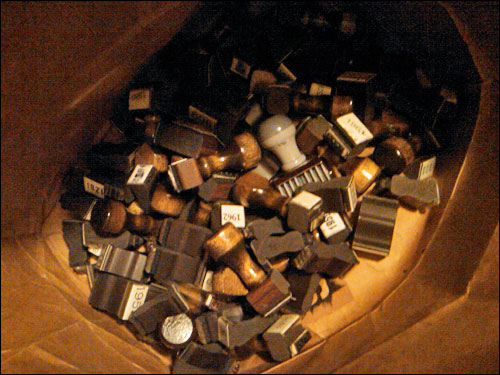
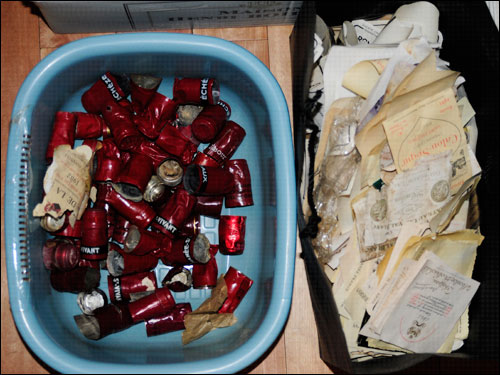
     When one goes to purchase a bottle of wine, she usually assumes that the information provided on the outside matches the contents on the inside. While numerous items are purported to be things they are not, it is difficult to discern a fake wine unless it is opened, thereby ruining its value if it were in fact real (at least until recently, see below). While it is alleged that Mr. Kurniawan engaged in counterfeiting bottles by creating fake wine labels using vintage stamps as well as old corks and foil wrappers, there are various ways to create a fraudulent wine.
Label Fraud
     Bottles of wine have numerous distinctive features that can make creating fraudulent wines a laborious process. Winemakers put their individual touch on everything from bottles to labels, but also items that are not readily visible when examining a bottle of wine, such as corks.
     One who wishes to engage in wine fraud may obtain bottles of expensive wine, fill them with less expensive wine, find appropriate corks and seals, and then pass the bottles off as the real McCoy. One may also create counterfeit labels of expensive wines and place them onto bottles of less expensive wine. In either case, the purchaser is not getting what he bargained for.
Grapes
     One may also market and sell grapes as certain types, when in fact they are not. No one is immune to such activities, as even Gallo Wine was the victim of fraud when French producers sold them purportedly 100% Pinot Noir grapes that were actually cheaper Syrah and Merlot grapes.
Blending
     While blending wine is not in and of itself illegal, and blended wines are growing in popularity compared to their single-grape counterparts, some blending practices are in fact fraudulent. Wine laws tend to include regulations on how much of a particular grape must be used in order to state that the wine is from that grape, and also address the issue of mixing grapes or wines from different regions.
     Mixing wine with other substances, such as water, sugar, or milk, also occurs, as well as mixing wines of differing vintages in order to create a more balanced final product. While some in the industry find no problem with such practices, others see it as sullying not only the wine, but also the industry itself.
     Other potentially fraudulent practices include humidification, or “adding water to wine.” This is a technique used by winemakers to make their wines taste better. The water is used to help balance extremely ripe grapes that have higher concentrations of sugars and phenolic compounds, but also has the effect of dropping the alcohol volume, sometimes below certain tax thresholds. 
     Wine fraud could also take the form of one stealing expensive wine and replacing it with cheap wine (leaving the actual owner none the wiser), or trying to collect insurance on lost bottles that never existed in the first place, as this wine educator and sometimes investigator notes.
Preventing Wine Fraud
     Besides the usual ways of dealing with claims of fraud, some wine-specific suggestions and examples have been offered to combat the unique problems of wine fraud.
  • There have been suggestions to change the way the rarest wines are sold at auction by revising the auction conditions of sale to address the issue of counterfeiting.
  • Websites exist to help the industry fight back against counterfeit wines and offer authentication services, for $249 per opinion (or at a discounted rate if you foresee yourself requiring their services on a regular basis).
  • Areas that produce numerous excellent wines, such as Italy, have gone so far as to train Carabinieri officers to become sommeliers so that they are better enabled to tackle wine crimes.
  •  Recently, scientists at UC Davis published a study that used non-invasive methods to determine what is inside a bottle of wine by examining the molecular structure of its contents.
  • And of course, there’s an app for that.
     For those of us who can’t afford fancy new techniques, websites also give quick tips on how to spot counterfeit bottles. While many will never purchase a bottle worth faking, it is important that the industry and the government take steps to prevent wine fraud in the future, ensuring that consumers know what they are purchasing, and producers are able to protect their product and reputation. 

Fancy wine labels: would you pay more for a wine you can't pronounce?

A recent study by Antonia Mantonakis, an Associate Professor of Marketing at Brock University's Faculty of Business, suggests that consumers are willing to pay more for wine with names that are more difficult to pronounce. To test her theory, Mantonakis assembled two groups of test consumers and each group was given two bottles of identical wine. One of the bottles was labeled with a more easily pronounced name (Titakis Winery) and the other was labeled with the harder-to-pronounce name (Tselepou Winery).

Both wine names are Greek, begin with a T, and have three syllables. Tselepou, however, is harder to pronounce and has more unusual letter combinations. The test consumers consistently rated the Tselepou Winery bottle higher. Additionally, after the tasting, the groups were given a survey to assess their wine knowledge. Those with more advanced wine knowledge showed more of a willingness to buy the wine from the hard-to-pronounce winery. One would think the opposite, as a well-versed wine connoisseur should be able to discern that the wines are exactly the same. As Mantonakis points out:
It’s interesting how consumers perceive things. Something like the sound of a name can elicit a thought, and that thought can influence the perception of how something tastes.
This same theory is true for high-end, gourmet cheeses. Previous studies have shown that consumers rated cheeses with difficult-to-pronounce names in Brush Script font as more valuable and gourmet.

Mantonakis is continuing her studies of this phenomenon. She is currently working to determine if wine labels themselves have a similar impact. Early research shows that test consumers are more likely to think a wine is award winning if there’s a photo on the label.

Savvy vintners appear to be taking note of the effects that fancy-sounding wine names and labels can have on consumer choices. For example, Vincent Arroyo Winery in Calistoga is using tin labels for its Napa Valley port, which retails for $22 per bottle. The theory is that the tin label gives the bottle a prestigious look that consumers are willing to pay for. With the tin labels priced at less than $1 per label, this may be an inexpensive strategy for enticing consumers to purchase the wine.

Screen printing labels directly onto the bottles is another way wineries are trying to distinguish their labels from others. According to label printer, Monvera, less than 1% of wine labels are screen printed today. Monvera markets their screen printed labels as a great want to make wine labels stand out from their paper counterparts. Screen printed labels can extend the length of the bottle because they aren't limited by the paper square on a traditional label.

Some wineries, however, take advantage of a different type of marketing to appeal to consumers. Instead of a marketing strategy that alludes to a product's prestige, these wineries attract customers because of their fresh and funky feel. Recently, more and more wines are being released under names such as "Fat Bastard," "Monkey Bay," and "Smoking Loon." These wines seem to be gaining popularity and seem to call into question, at least in part, the application of Mantonakis's research to consumer purchasing habits. Perhaps consumers are "willing" to pay more for wines with harder-to-pronounce names, but when it's time to make a purchase, they go for the "Goats-Do-Roam."

Wednesday, February 22, 2012

Immigration: Effect of Whine on Wine

Debate over the current state of American immigration remains a hot topic in the political arena. It is no secret that farmers often rely on immigrant labor. Therefore, it is no wonder that farmers support immigration reform. All across the nation, farmers are suffering because of the insistence of some that undocumented workers be driven out. In a recent Legal Ruralism post, I noted how all across the country, farmers face farm labor shortage concerns from a wide range of agriculture, from dairy to berries. California wine is no exception.

In California, farmers are worried about their grape harvests (and subsequent raisin production). Individuals, such as Roy Beck (the executive director of Numbers USA, a nonprofit that supports lower immigration levels) suggest that farmers resort to mechanization of harvesting. Some vineyards have headed this suggestion and replaced grape harvesting jobs with machines. No only have some vineyards implemented mechanical harvesting, some find this method superior to handpicking for a variety of reasons (most notably its cost effectiveness). But for others, mechanical picking does not adhere to the spirit of wine making while others possess vineyards not suitable for machine work (as the machines could cause damage to the vines and soil).

Proper agriculture labor involved with wine growing is both physically difficult and requires a level of skill and sophistication. It took several strikes by the United Farm Workers union for grape growers labor conditions to improve beyond the horrific depiction in Steinbeck's "The Grapes of Wrath." This should have made the cost of grapes increase, but instead they stayed the same. America likes things cheap, and we constantly undervalue the effect proper compensation of lower tier employees has on the end cost of a product. Wineries in Napa and Sonoma have the capacity to pay their employees a fairer price as their grapes yield a higher value. In turn, these wineries possess a lower reliance on undocumented labor.

Some fear that undocumented workers take American jobs. When it comes to agriculture, this argument simply does not hold up. The Gray Report blog astutely points out, "[i]f we didn't need them, we wouldn't hire them, and they wouldn't come." Wine Geeks fears about what would happen if the labor force vanished. They logically predict that,
Prices will skyrocket. Production will drop. Small mom and pop wineries, the kind that we winegeeks love to praise, will be forced out of business because they cannot get enough people to harvest the grapes and they can’t compete with the gigantic companies who harvest by machine. This is but one aspect of our society that has become increasingly dependent upon the work of those who are foreign to our soil.
It is clear that immigration reform is needed in order to accommodate both the quantity of workers wanting to work in the United States and the amount of work that needs to be done. Personally, I believe this country craves more creative policy suggestions. For example, The Gray Report suggests issuing visas for guest workers, which would permit multiple entries and be renewable. After consistent presence and lack of criminal activity, they would be able to obtain a higher level of green card. These kind of solutions help fulfull the immigration enforcement primary policy objective, while providing labor for the work that needs to be done.

Despite the policy shift, there also needs to be a cultural shift. There is no way for wine to remain as cheap as it currently is without relying on machine harvesting or underpaying the workers who pick the wine. As a country we simply need to come to terms with this understanding and move on. I suggest doing so over a glass of nice California wine with some close friends.


Wednesday, February 8, 2012

Should movie theaters be allowed to serve beer and wine in the presence of minors?

On January 30th, 2012, Seattle’s King 5 News reported that a Seattle, Washington movie theater that has been serving beer and wine for the last seven years may soon need to change its business model.

Central Cinema, located in Seattle’s Capitol Hill neighborhood, serves beer and wine to customers over the age of 21. The theater even hosts cartoon happy hours, during which children watch cartoons while their parents enjoy a glass of wine or beer. Patrons may order food as well. Central’s owner only recently became aware that the business was breaking a 2010 law.

The King 5 News article states that the 2010 law allows theaters like Central Cinema to serve beer and wine, but only as long as there are no minors present. The owner of the theater, Kevin Spitzer, says that the theater has been an “all ages place” since it opened close to seven years ago, and that he wasn’t aware of the 2010 law until he applied for an enhanced liquor license that would allow him to sell cocktails in addition to beer and wine. Spitzer has successfully renewed his license since 2010, and the oversight was not detected until he applied for the enhancement.

Spitzer and other theater owners are looking to the state’s lawmakers to change the law. A proposed bill would allow the theaters to continue serving beer and wine while minors are present, so long as there are measures in place to keep alcohol out of their hands. The bill defines “minor control plans” as  “…written, dated, and signed plan[s] submitted to the board by an applicant or licensee for the entire theater premises, or a room or area therein, that shows where and when minors are permitted and the control measures used to prevent minors from obtaining alcohol, prohibit minors when drinking alcohol predominates, and minimize minors' exposure to a drinking environment.”

A representative of the Washington State Liquor Board, Brian Smith, commented that the problem with the proposed bill is enforcement. He said, "Imagine a movie theater, a dark movie theater, can you go in there and be able to check ID's without being disruptive? No, you can't really do that very easily."

Many of the public comments to the King 5 News article indicate that some members of the public don’t see the difference between theaters like Central Cinema and restaurants that serve alcohol in the presence of minors. Other comments show concern that the presence of alcohol in movie theaters will lead to disorderly conduct. User “emptynestr” characterized the difference between the two as disastrous, calling movie theaters like Central “…a recipe for untold disasters...stalking, preying on innocent girls, to name a couple.” Other comments suggested that theaters like Central should be strictly 21 and over.

California’s El Cerrito is also home to a movie theater that serves beer and wine to its 21 and over clientele. The theater has a license issued by California’s Department of Alcoholic Beverage Control for the sale of beer and wine on the premises as an “eating place.” In addition to wine and locally brewed beers, the theater serves pizza, sandwiches, and salads.

Despite the similarities between Central Cinema in Seattle, Washington and Rialto Cinemas in El Cerrito, California, the two states take different approaches to alcohol regulation. While California is a license state, Washington is a control state. In California, the California Department of Alcoholic Beverage Control issues licenses for the manufacture and sale of alcohol to all individuals and businesses in the distribution channel. In Washington, however, the Washington State Liquor Control Board is the only authorized wholesaler of and operator of liquor stores, and the sole governmental body responsible for issuing retail licenses to bars for the sale of beer, wine, and spirits for on-site consumption.

Following the repeal of Prohibition, the control states contended that eliminating or limiting the role of the private enterprise in the liquor market was the best way to ensure the health and safety of the public. Despite a seemingly more “temperate” reputation, most control states, like Washington, are now hybrid states (monopolizing wholesale liquor sales and licensing retail liquor sales). If the Washington legislature decides to pass the proposed bill, it might not be long before both license and control states are serving alcohol in movie theaters- an idea that may have horrified the supporters of the temperance movement.


Direct Shipping Law Signed in New Jersey


The Twenty-first Amendment gives states broad powers to regulate the importation and use of alcoholic beverages within their borders. While there are federal laws dealing with alcoholic beverages, each state is able to create its own laws regarding the importation of such beverages. This has resulted in a patchwork of state laws that vary widely.

These variations have major implications for the wine industry. One’s ability to participate in wine of the month clubs, make online purchases, and ship wine home from a trip to the Napa Valley is dependant on where one lives. While some states have no restrictions on direct to consumer shipping, others prohibit the practice entirely, while still many more limit the amount allowed to some degree.

Last month, New Jersey became the most recent state to allow direct to consumer shipping of wine. Governor Chris Christie signed the legislation approving this measure, meaning that New Jersey will join 38 other states that allow at least some form of direct to consumer shipping of wine into the state. The law will go into effect on April 1, 2012.

Not only will this law allow residents of New Jersey to import wines from around the country and abroad, but it will also allow New Jersey wineries to ship their wine directly to customers outside of the state. Under the new law, customers can have up to twelve cases of wine per year shipped to them for personal consumption from a winery that produces 250,000 gallons of wine or less annually.

While not a place one usually associates with wine making, New Jersey has more than forty wineries that produce over 225 different varieties of wines, and is the seventh largest producer in the nation. Local New Jersey vineyard owners said that the new law allowing small wineries to bypass distributors and ship directly to customers will benefit their industry, though it may take a few years for them to recognize significant profits. Some have even noted that Robert Mondavi had to start somewhere, and hope that the new law will provide them with opportunities to make New Jersey wines as well known as those from already well-established winemaking regions. This is an important step for local winemakers as they seek broader recognition of the quality of their products.

However, not everyone is pleased with the new legislation. Wine retailers are concerned that they will see their sales of cases of wine decline, particularly around the holiday season. Direct shipping allows wineries to undersell local stores, providing a benefit to the consumer, but a potential detriment to the stores. Owners of “mom and pop” shops are concerned that they will see sales decline. Some are also concerned with the potential effect this law will have on the New Jersey economy, from the extra 18-year-old workers they hire during the holiday season to the state and local jurisdictions that will not receive tax revenue, to the fact that direct shipment from California wineries will result in revenues spent in other states, rather than New Jersey.

Though the legislation was signed into law, it still faces the approval of a federal court judge who must rule whether New Jersey the legislation is constitutional, and ensure wineries have stopped disallowing out-of-state wineries to operate retail outlets and tasting rooms within the state. Previously, in Freeman v. Corzine, 629 F.3d 146 (2010), the court held that New Jersey policies prohibiting out-of-state wineries from operating retail outlets was unconstitutional. Furthermore, it may still take time before the law can be implemented effectively by the State Alcoholic Beverage Control Commission.

Each state in the United States has its own laws regarding direct shipment of wine. New Jersey’s twelve case rule puts it on par other states such as Illinois, Louisiana, Maine, New Hampshire, Vermont and Wisconsin. Other states vary wildly, from Wyoming and Minnesota that allow only two cases per year, to Idaho at 24, New York at 36, and California, Colorado, Florida, Iowa, and Washington that have no limit. Still other states, such as Alabama, Arkansas, Delaware, Kentucky, Massachusetts, Oklahoma, South Dakota, and Utah, prohibit the practice entirely. 

Is wine good for the heart?

A glass of wine a day is good for the heart. And wineries are capitalizing on the medical benefits assigned to their product. One winery is hosting a Women Take Heart program this month where women can taste wine, eat heart healthy snacks, and get tips on how to stay health from a cardiologist and nutritionist. Which begs the question—is wine really that healthy for the heart? Or do we just want to feel good about having a nice beverage in the evening?

According to one study ,“scientific research has demonstrated that the molecules present in grapes and in wine alter cellular metabolism and signaling, which is consistent mechanistically with reducing arterial disease.” The study fell short, however, of endorsing wine as a definite health-producing drink. Another study found that wine had a greater beneficial effects on “total mortality” than beer or other spirits, but warns that this only includes moderate wine consumption. Then again, perhaps it is only because we believe that wine is good for us that it produces beneficial side effects. A Danish study found that “a light to moderate wine intake is related to good self perceived health, whereas this is not the case for beer and spirits.”

With all of the conflicting evidence, I turn to the Mayo Clinic for conclusive advice. The take away is that red wine may reduce “bad” cholesterol and prevent blood clots, but a good doctor is unlikely to prescribe wine to combat heart disease due to the still inconclusive research on the topic. Resveratrol, which is found in the skin of grapes, may be the reason red wine lowers “bad” cholesterol. Resveratrol is also found in peanuts and cranberries, but it is unknown whether these foods would produce the same beneficial results that wine does. The Mayo Clinic also suggests that it is possible that it is the alcohol itself that is beneficial, inferring that a beer a day, or a shot a day could be a healthy substitute. The verdict is not yet out though so, for now, it may be best to stick with red wine, and only in small amounts (5 ounces/day) if any.

Starbucks: the bar?

Starbucks (NASDAQ: SBUX) recently announced plans to begin selling wine and beer in four to six of its Seattle-region stores. Starbucks has plans to later expand to Southern California, Atlanta, and Chicago. Beers will sell for $5 and a glass of wine will sell for $7 to $9. The transition for Starbucks from coffee and juice to wine and beer seems as thought it will be relatively simple. Starbucks already has a loyal customer base and adequate indoor seating at most locations. The interiors, however, will undergo some changes. Starbucks will make use of community tables and local art to make the space inviting for evening customers looking to unwind after work.

Clarice Turner, Starbucks' senior vice president for U.S. operations, explains the rationale behind the transition into wine and beer sales.
As our customers transition from work to home, many are looking for a warm and inviting place to unwind and connect with the people they care about. At select stores where it is relevant for the neighborhood, we are focused on creating an atmosphere where our customers can relax with a friend, a small bite to eat and a cup of coffee or glass of wine.
Some critics argue that Starbucks should just focus on what they do best: serving coffee. Others think it makes sense for Starbucks to move into this market. Given Starbucks broad appeal, it seems like a logical evolution of the brand. Current sales are concentrated in the morning hours (70% of Starbucks' sales occur before 2pm). By moving into wine and beer sales, Starbucks can grow its afternoon and evening business.

What will these changes mean for local bars located near a Starbucks that is serving beer and wine? For beer and wine-serving tenants in the same complex, Starbucks could draw some business away. Starbucks' prices are very competitive and they already have strong brand recognition. These factors could easily sway customers to choose Starbucks over local bars who cannot afford to charge only $5 for a pint of Rogue Ale.

In states with a local option for alcohol sales (meaning the local jurisdictions can vote to restrict the time and place of alcohol sales), there are often limitations as to how many establishments within a complex or city/county can have a liquor license. With Starbucks' now obtaining liquor licenses, it may be harder for local bars to move into these locations.

Starbucks isn't the only chain moving into this market. Sonic and Burger King are also exploring beer and wine sales as a way to expand their current market share. Burger King now has "Whopper Bars" where customers can order a beer along with their burger. Locations include Miami, New York City, and Las Vegas. Sonic plans to sell bottled and draught beer and wine in two South Florida locations. These fast-food chains may need more capital investments than Starbucks, however, to get their locations ready to serve beer and wine. Sonic, with mostly outdoor seating and in-car service, will definitely be making some upgrades before alcohol can be served.

So why is Florida so popular for these new fast-food bars? Perhaps it's because Florida is not an alcoholic beverage control state. Alcoholic beverage control states are states that have a wholesale and/or retail monopoly on some or all forms of alcoholic beverages. In Florida, as a non-control state, the state does not have a monopoly on retail sales of liquor, including wine and beer. Only a liquor license is required in order for an establishment to serve alcohol on a regular basis. This would be easily obtained by large fast-food chains where over 51% of their total sales is from food. Starbucks, however, will need to up their food sales to reach this threshold as required by many non-control states.